Shopify vs WordPress vs Odoo: What Nobody Tells You Before You Choose (2026)

Anjani Thakor
Marketing Manager

Get Your Website Audit
Share your details and we’ll analyze your site for key improvements within 24 hours.
Quick Answer
Shopify is the best choice for most businesses in 2026 — fast to launch, built for selling, and requires no technical team to maintain. WordPress with WooCommerce is the best choice for businesses where SEO and customization are the primary growth drivers. Odoo is a powerful ERP platform that includes an ecommerce module, but it's better suited for backend operations than for building a high-converting customer-facing storefront.
We've been there — client walks in, excited, budget ready, deadline set. They've already decided on Odoo because it "does everything." Six weeks later, we're untangling a mess of broken modules and a storefront that looks like it was designed in 2011. Nobody wins.
This isn't theory. This comes from real client projects, real bugs, and real money lost on wrong decisions.
This isn't another feature checklist. We've actually built stores on all three platforms. We've sat with the bugs, the billing surprises, the "why won't this theme work" moments at 11pm. This is what we'd tell a friend before they made the choice — including the parts most comparison blogs skip because they're busy earning affiliate commissions.
If you're comparing Shopify vs WordPress vs Odoo in 2026, the decision you make here will follow your business for years. Let's make sure you make the right one.
Odoo
Powerful — but frustrating for storefronts
Great ERP. Painful customer-facing experience without a developer.
WordPress
Flexible — but you carry the maintenance
Best SEO and ownership. Real technical overhead.
Shopify
Costs money — but saves time and lost sales
Fastest path to a selling store. Less control, more predictability.
Shopify vs WordPress vs Odoo — which one is best in 2026?
The short answer is: it depends on what your business actually needs. But here's what three years of building real stores on all three platforms has taught us — most people choose the wrong one because they're optimizing for the wrong thing. They pick based on price. Or based on what sounds most impressive in a pitch. Or because a blog told them one platform is universally "best."
None of that is how real platform decisions should work. So let's go through each one honestly.
The Odoo reality check — powerful ERP, but a painful storefront
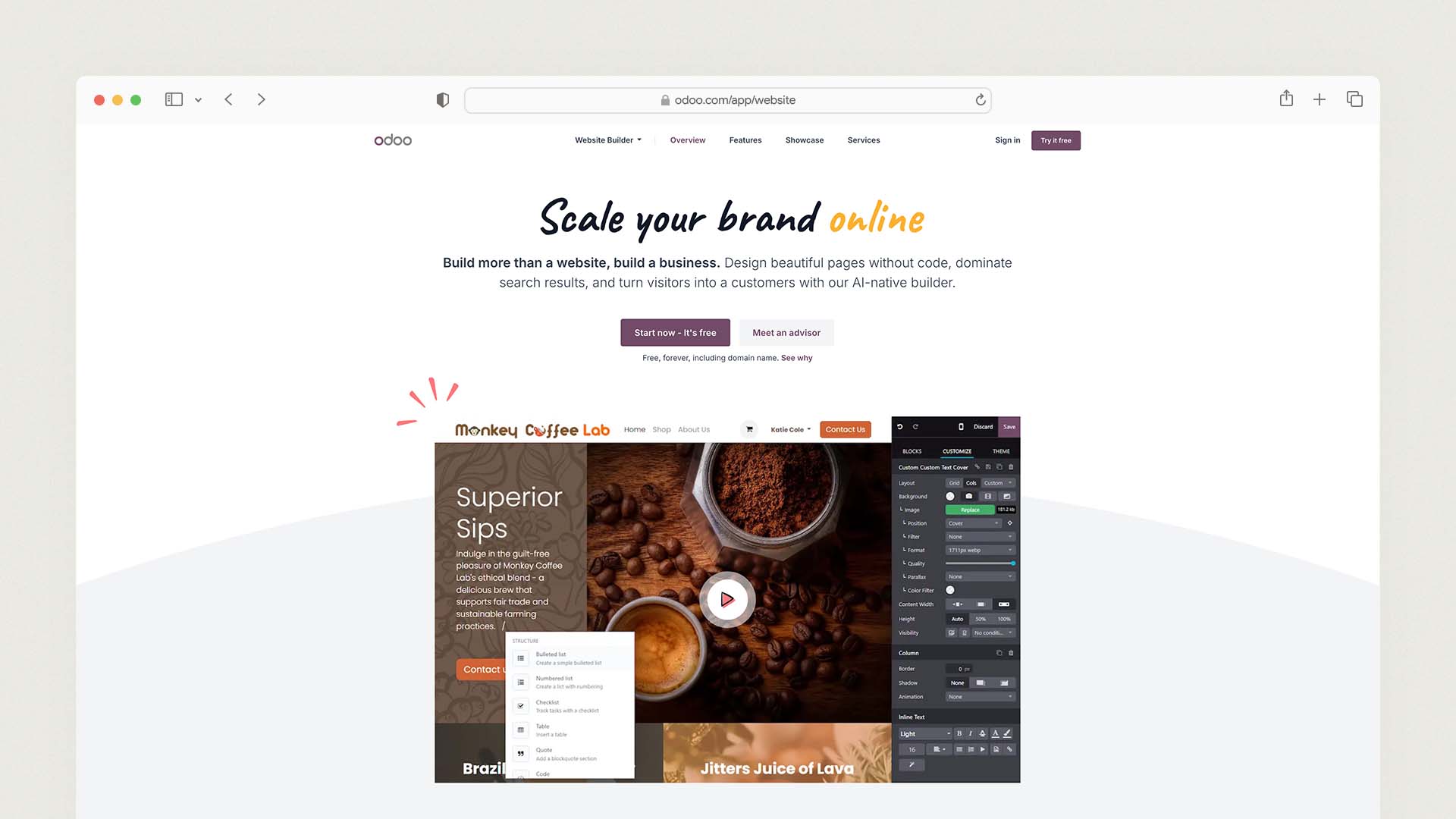
Odoo's pitch is genuinely compelling: one platform for your store, inventory, accounting, CRM, HR, and everything in between. If that sounds like exactly what you need, you're not wrong to be interested.
But here's what the sales page won't tell you.
Odoo's free plan is limited to one application — and running an actual ecommerce business almost certainly requires several. Through the course of normal use, you'll nearly always require the paid version, which starts around $24.90 per user per month on an annual plan. That cost per user model adds up quickly for any team beyond two or three people.
Then there's the storefront itself. Users consistently report that Odoo eCommerce requires developer intervention for meaningful UI customization. That's not a minor inconvenience — it means every time you want to change how your product page looks, adjust the checkout flow, or add a feature your customers expect, you're calling a developer. Every custom workflow or module adds complexity, maintenance cost, and upgrade risk.
Occasional bugs and slow support are also recurring complaints across G2, Capterra, and Trustpilot reviews. When something breaks in Odoo, the resolution path is rarely quick — and for a live store, that matters.
Our honest verdict on Odoo
Odoo is genuinely excellent as an ERP for operations-heavy businesses. As a primary customer-facing storefront — especially for teams without a dedicated technical partner — it's a difficult choice. Use it for the back office. Be very deliberate before making it the face of your business.
Odoo is right for you if you already use it for ERP and want a connected store, have a developer or implementation partner on your team, or if operations management — inventory, invoicing, CRM sync — genuinely matters more than storefront design.
WordPress + WooCommerce — full control, but you carry the weight
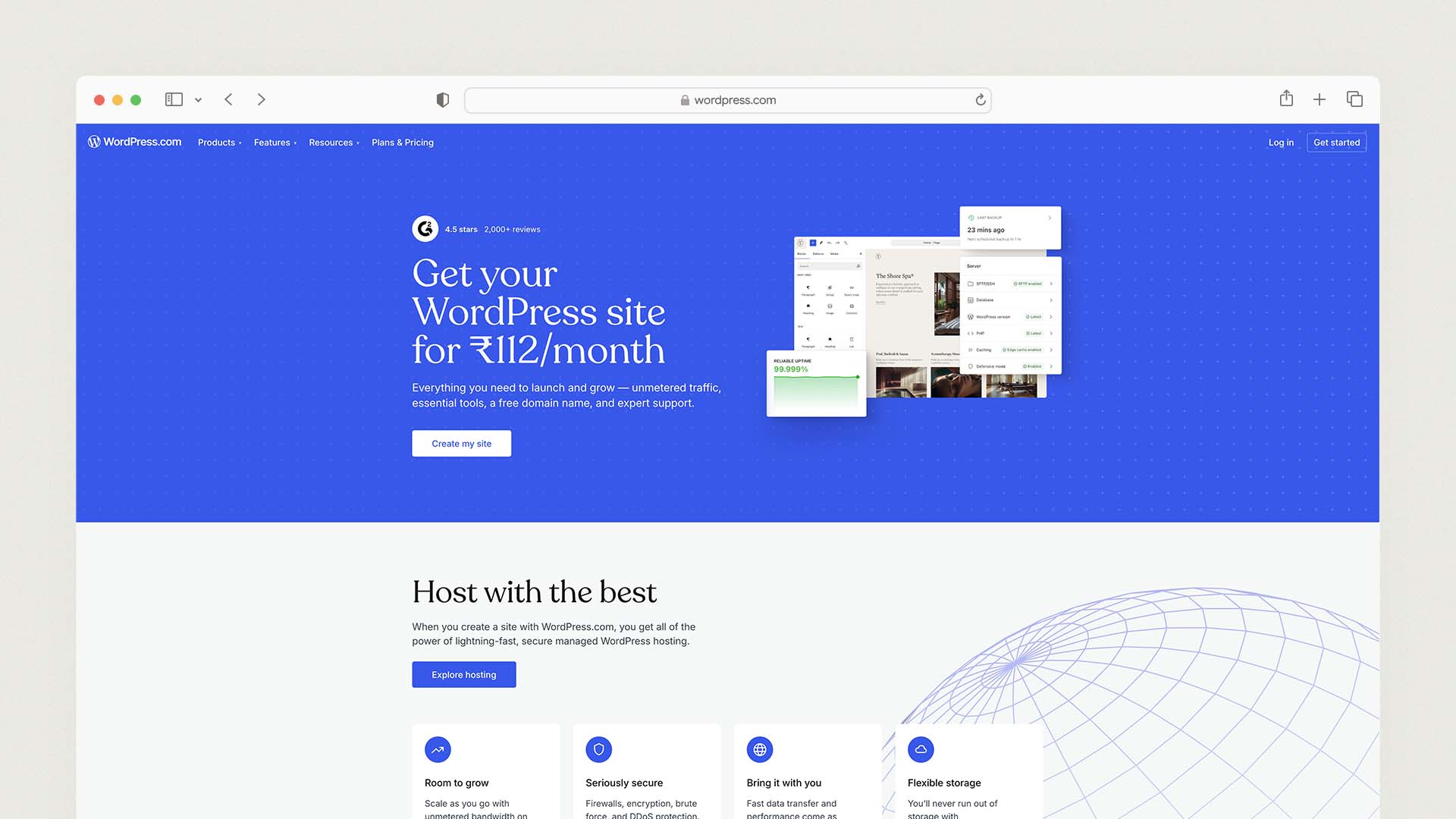
WordPress powers over 40% of all websites on the internet. WooCommerce powers approximately 28–36% of all global ecommerce stores. Those numbers aren't an accident. They reflect what happens when you give developers and business owners genuine freedom.
If you can imagine it, WordPress can likely build it. Custom product configurators, subscription models, membership gating, multilingual stores, deeply integrated content marketing — all of this is possible in ways that other platforms simply cannot match. WooCommerce also has a stronger SEO foundation than either Shopify or Odoo, with granular control over URLs, meta tags, schema markup, and content structure through tools like Yoast SEO and RankMath. For businesses where organic traffic is the primary growth channel, this advantage is significant.
The trade-off is real, and we'll be straight with you about it.
WooCommerce is self-hosted — you manage the server, the database, and the maintenance. Every update to a plugin or WordPress core carries a risk of breaking things. This creates what experienced developers call a "maintenance tax." Over time, a WooCommerce store can accumulate conflicting plugins and technical debt that requires a qualified developer to untangle. And while the platform itself is free, building a properly functioning store often involves premium themes, essential plugins, and developer time that push costs higher than they first appear.
Our honest verdict on WordPress
WordPress is the right long-term choice if you want to own your platform completely, build serious SEO authority, or need a store that behaves in genuinely unique ways. But go in knowing it's a relationship — not a setup you finish once and forget.
WordPress + WooCommerce is right for you if content marketing and SEO are central to how you'll grow, if you want full code ownership, or if your store has requirements that out-of-the-box platforms cannot handle.
Shopify — the fastest way to a store that actually converts
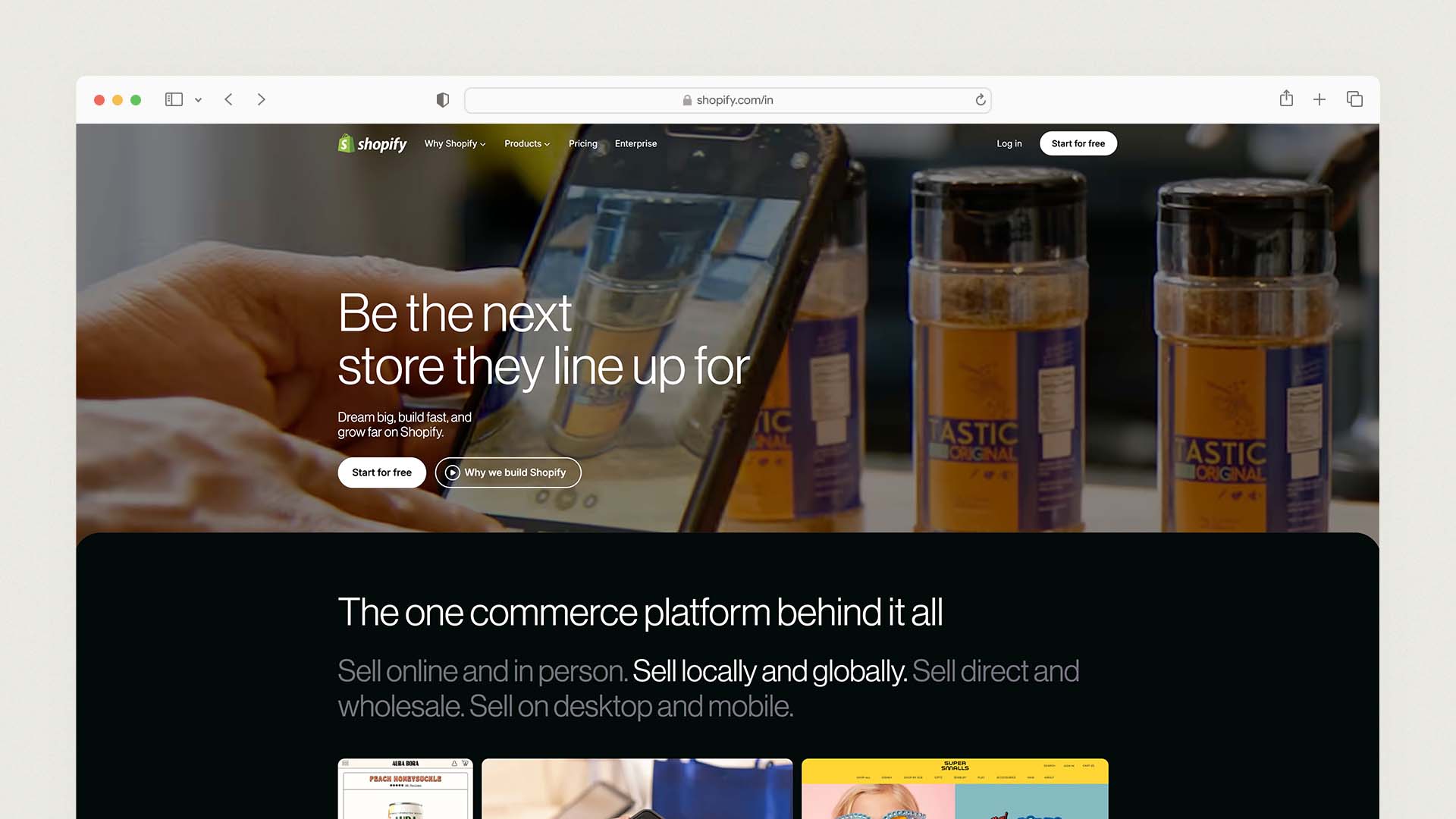
For most businesses starting out or scaling without a developer in-house, Shopify is the safest, fastest, and most predictable choice in 2026.
Shopify is designed for non-technical business owners. Setup is guided — you can have a live, functioning store within hours without touching a single line of code. Products, payments, shipping, inventory, and customer management all live inside one clean dashboard. Shopify's AI features have expanded significantly in 2026, with native tools for product descriptions, email campaigns, and personalized store recommendations built in.
The app store holds over 8,000 integrations. Themes are professionally designed and conversion-tested. And critically — because Shopify handles server uptime and core security — you don't face the emergency developer bill when a platform update breaks your checkout in the middle of a sale. That predictability is worth real money for startups managing cash flow carefully.
The real costs are worth understanding clearly. Plans start at $39/month for Basic. Transaction fees run up to 2% unless you use Shopify Payments. Many apps carry their own monthly subscriptions on top. A serious Shopify store often costs more monthly than it initially appears, especially once apps start adding up. And a notable portion of Shopify's Trustpilot reviews raise concerns about customer support and unexpected account issues — worth knowing before you commit fully.
Our honest verdict on Shopify
Shopify doesn't give you the most control — it gives you the most reliable path to a working, selling store without the technical overhead. You're not just paying for software. You're paying for time, stability, and the confidence that your checkout will work tomorrow morning. For most businesses, that trade is worth it.
Side-by-side comparison
Final decision — simple version
Choose Shopify if you want to launch fast and focus on selling from day one
Choose WordPress if you want full control, SEO power, and long-term digital ownership
Choose Odoo if your business depends on deep backend operations more than storefront experience
Factor | Shopify | WordPress + WooCommerce | Odoo |
|---|---|---|---|
Best for beginners | Yes | Moderate | No |
Ease of launch | Hours | Days to weeks | Weeks+ |
Storefront quality | Excellent | Excellent | Needs developer |
Customization | Within framework | Unlimited | Unlimited but complex |
SEO strength | Good, beginner-friendly | Best in class | Basic tools only |
Ongoing cost | $39–$399+/month | $50–$150/month avg | ~$25–$39/user/month |
ERP / operations | Via apps only | Via plugins | Native and powerful |
Technical maintenance | Managed by Shopify | Your responsibility | Moderate to high |
Best for | Fast growth, beginners | SEO, custom stores, ownership | Operations-heavy businesses |
Which one should you actually choose?
Choose Shopify if
You want to launch and sell, fast
No developer needed. Clean store live in days. Best for startups, DTC brands, and time-poor entrepreneurs who need results, not a project.
Choose WordPress if
You want to own everything and grow with SEO
Full code access, no platform lock-in, the best content and ecommerce combination available. Best for businesses where organic traffic is the long game.
Choose Odoo if
Operations are your primary challenge
Inventory, multi-company, CRM, invoicing — all natively connected. Best when you need the ERP first and the storefront is secondary.
The biggest mistake businesses make when choosing a platform
They choose based on price instead of business goals. That's the mistake we see most often, and it's the most expensive one.
Someone picks WordPress because it "feels cheaper" — then spends significant money on a developer to fix a plugin conflict six months in. Someone goes with Odoo because it "handles everything" — then realizes their storefront doesn't convert because it takes a developer to change anything. Someone avoids Shopify because of the monthly fee — then loses in sales because their checkout experience is harder than it should be.
The real cost of a platform is never just the subscription. It's the developer hours, the lost sales, the time spent maintaining things that should just work, and the migrations you eventually have to do when the wrong choice becomes undeniable.
The right question isn't "which platform is cheapest?" It's: what does my business actually need to grow right now, and which platform removes the most friction to get there?
A word on why we wrote this
At 8Spark, we've built real projects on all three platforms. We've had the Odoo conversations. We've rescued WordPress installs. We've helped clients make the move to Shopify when they'd been fighting their old setup for too long.
We're not here to push one platform over another. The honest truth is that all three are the right answer for the right business — and the wrong answer when applied to the wrong one. That nuance is exactly what most comparison content skips in favor of an affiliate payout.
Wrong platform costs you months. The right one makes you money from day one.
Still unsure which platform fits your business?
At 8Spark, we've worked with Shopify, WordPress, and Odoo in real projects — not just demos. We'll tell you what actually fits your business and your goals, even if it means recommending the less popular option. No sales pitch. Just the honest answer for your specific situation.
FAQs
Which platform gives the highest ROI for ecommerce?
Shopify typically delivers the highest ROI for most businesses because it reduces technical overhead and provides a reliable, conversion-focused selling environment from day one. WordPress with WooCommerce delivers better ROI for SEO-driven businesses where organic traffic compounds over time. Odoo is better suited for operational efficiency and backend management rather than direct sales performance as a primary storefront.
Is Shopify better than WordPress for ecommerce?
For most non-technical users, yes — Shopify is easier to launch, maintain, and scale without a developer. WordPress with WooCommerce is stronger for SEO and customization. The right answer depends entirely on whether you prioritize speed and simplicity or long-term ownership and content-driven growth.
Is Odoo good for ecommerce websites?
Odoo works as an ecommerce platform, but it's significantly better as a backend ERP. Its storefront requires developer work for meaningful customization, and its free plan is limited to one app. It's the right choice when operations management comes first and the storefront is secondary — not when you need a polished, high-converting customer experience out of the box.
Which ecommerce platform is cheapest long-term?
This depends on your scale and technical resources. WooCommerce often has lower platform fees but adds up in hosting, plugins, and developer time. Shopify has predictable monthly costs but transaction fees and app subscriptions can grow significantly. Odoo charges per user per month, which scales costs with team size. For small stores with technical skills, WooCommerce can be cheapest. For fast-growing stores without developers, Shopify often wins on total cost of ownership.
What is the best ecommerce platform for beginners in 2026?
Shopify. No technical setup required, hosting and security are fully managed, and a functional store can be live within hours. WordPress is a capable second option if you're willing to invest time upfront or work with a developer from the start.


Ready to Stop Managing Vendors and Start Working With a Real Partner?
Let's have an honest, strategic conversation about your business challenges, growth goals, and whether we're the right team to help you achieve them.
Business Review
Market Analysis
Strategic Recommendations